Thanks for your interest in my study! If you have additional questions or would like to connect, you can find my contact information here. Please don’t hesitate to reach out.
Influenza Vaccination
Intentions:
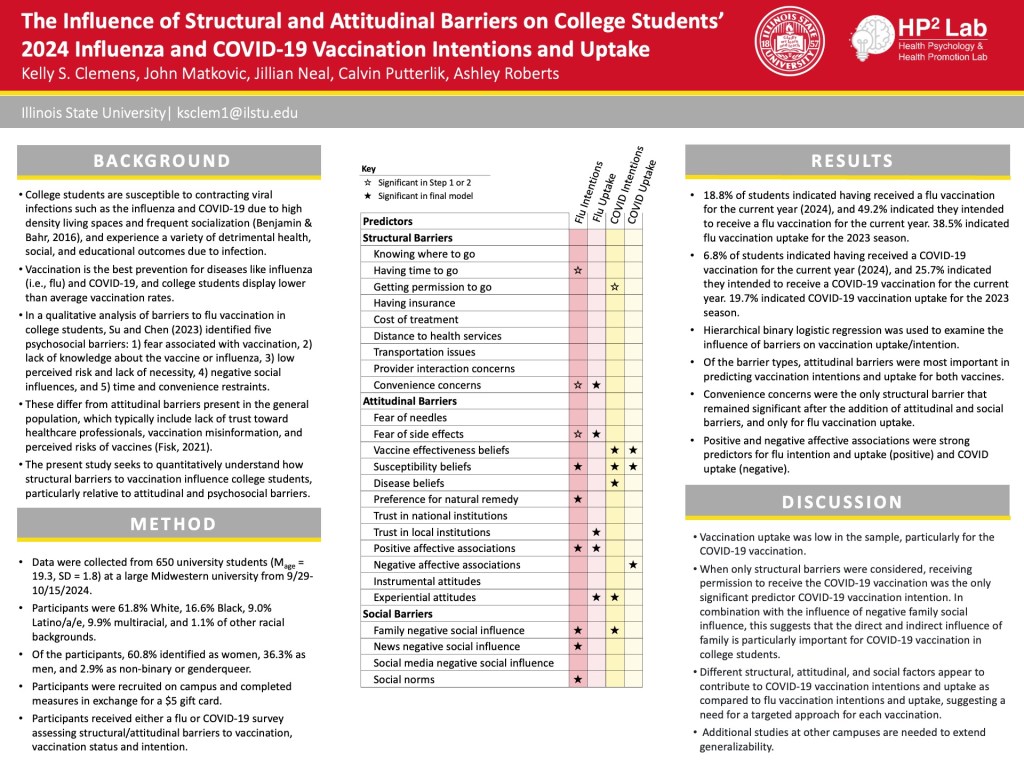
A binary logistic regression was performed to ascertain the predictors of flu vaccination intentions. The final logistic regression model was statistically significant, χ2(9) = 105.40, p < .001. The model explained 44.0% (Nagelkerke R2) of the variance in vaccination intention and correctly classified 78.7% of cases. Higher endorsement that the individual was not susceptible to the flu, increased preference for natural remedies (e.g., developing immunity through exposure), and negative family social influence (e.g., I have been told by my family that the flu vaccine is not effective/that I should not receive the flu vaccine) were associated with a decreased likelihood of intending to receive the flu vaccination. Increased positive affective associations, positive social norms, and, interestingly, increased negative news social influence were associated with an increased likelihood of intending to receive the flu vaccination.

Uptake:
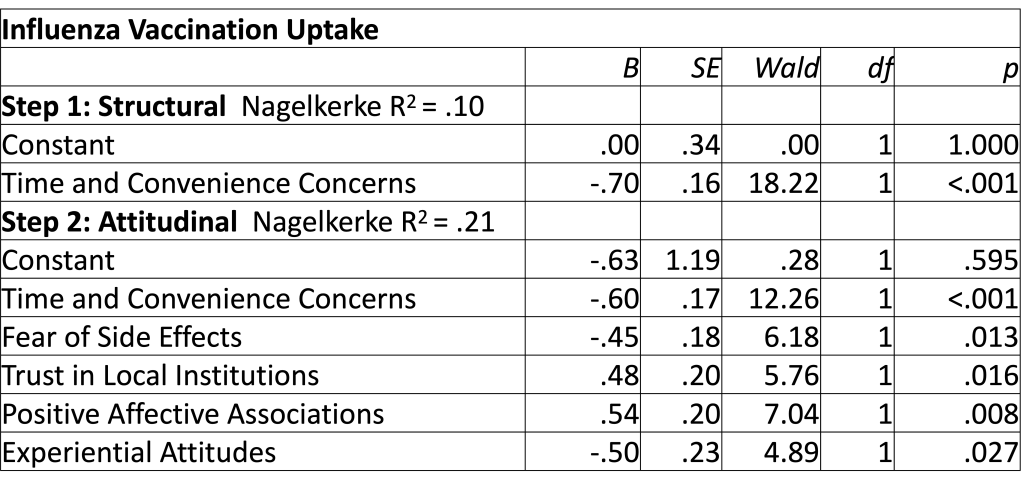
An additional binary logistic regression was performed to determine the predictors of flu vaccination uptake. The final logistic regression model was statistically significant, χ2(5) = 43.99, p < .001. The model explained 20.5% (Nagelkerke R2) of the variance in vaccination uptake and correctly classified 82.0% of cases. Greater amounts of convenience concerns and fear of side effects were associated with an decreased likelihood of receiving the flu vaccination, but greater positive affective associations, experiential attitudes, and trust in local institutions (e.g., their university or local hospital) were associated with a increased likelihood of receiving the flu vaccination.
COVID-19 Vaccination
Intentions:
A binary logistic regression was performed to ascertain the predictors of flu vaccination intentions. The final logistic regression model was statistically significant, χ2(6) = 77.60, p < .001. The model explained 33.4% (Nagelkerke R2) of the variance in vaccination intention and correctly classified 75.7% of cases. Lower beliefs about vaccine effectiveness, higher endorsement that the individual was not susceptible to COVID-19, and negative family social influence were associated with decreased likelihood of intending to receive the COVID-19 vaccine. Beliefs about that COVID-19 is a serious disease and positive experiential attitudes were associated with an increased likelihood of intending to receive the COVID-19 vaccine.

Uptake:
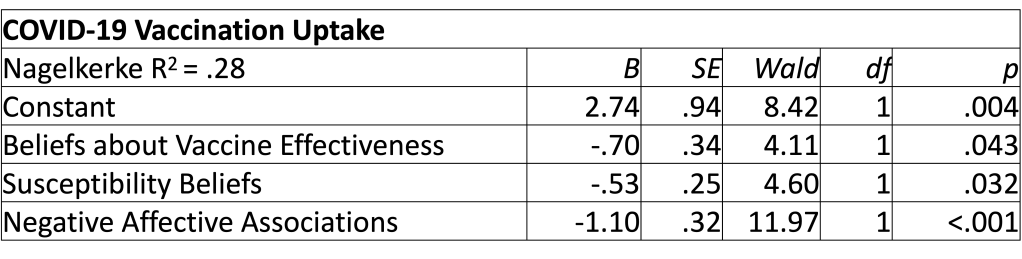
A binary logistic regression was performed to ascertain the predictors of flu vaccination intentions. The final logistic regression model was statistically significant, χ2(3) = 37.72, p < .001. The model explained 28.1% (Nagelkerke R2) of the variance in vaccination intention and correctly classified 93.8% of cases. Lower beliefs about vaccine effectiveness, higher endorsement that the individual was not susceptible to COVID-19, and negative affective associations were associated with decreased likelihood of intending to receive the COVID-19 vaccine.
 HP2 Lab